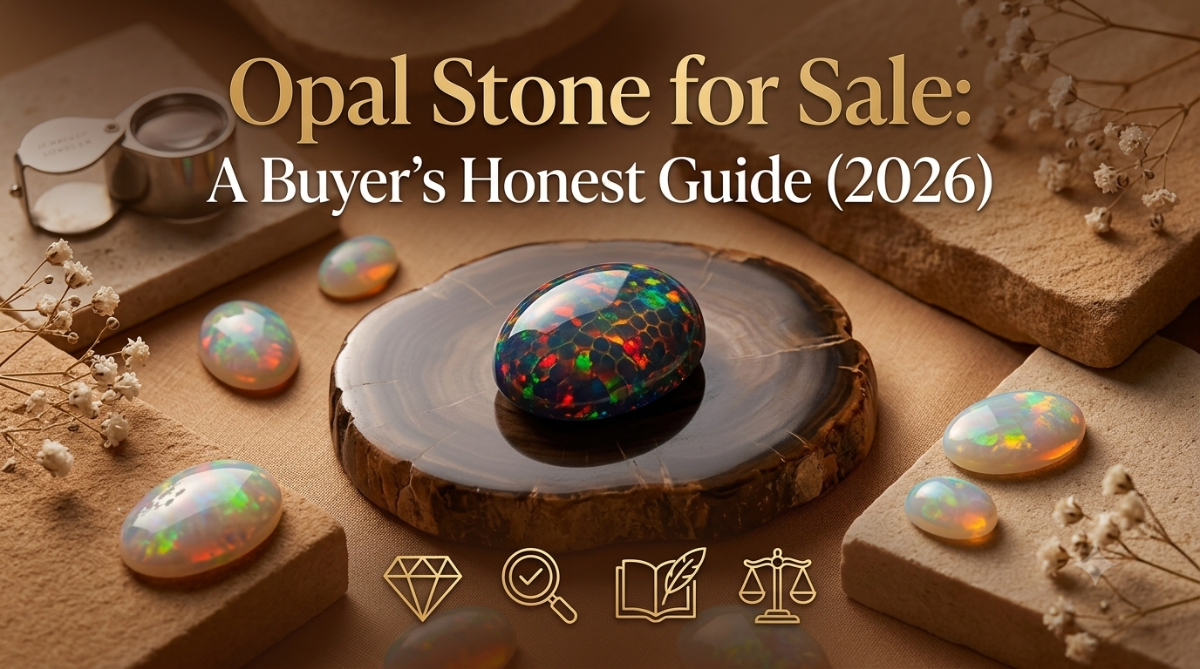
Opal Stone for Sale: A Buyer's Honest Guide

Thinking about buying an opal stone for sale? I share what 7 years of sourcing directly from Ethiopian mines.
I still remember the first time I held an Ethiopian opal up to the light. It wasn't a big stone — barely the size of a fingernail — but inside it, color was moving. Green slid into orange, orange flashed into violet, and for a second I forgot I was standing in a dusty cutting workshop in Jaipur. That's the moment opal stopped being "just another gemstone" for me and became something I'd spend the next several years chasing across mines and markets.
So when people search for an opal stone for sale, I get it. You're not just buying a rock. You're buying a piece of frozen light, and you want to make sure it's real, well-cut, and worth your money. Let me walk you through everything I tell my own customers before they buy.
Why Opal Behaves Like No Other Stone
Most gemstones get their color from minerals trapped in their structure. Opal is different. It's made of tiny silica spheres stacked in a grid, and when light passes through the gaps between them, it bends and splits into color the same way a prism works. That's the "play-of-colour" you see advertised on every opal stone for sale listing, and it's not a marketing trick. It's physics, and it's the reason no two opals ever look exactly alike.
Where Does the Opal Stone You're Buying Actually Come From?
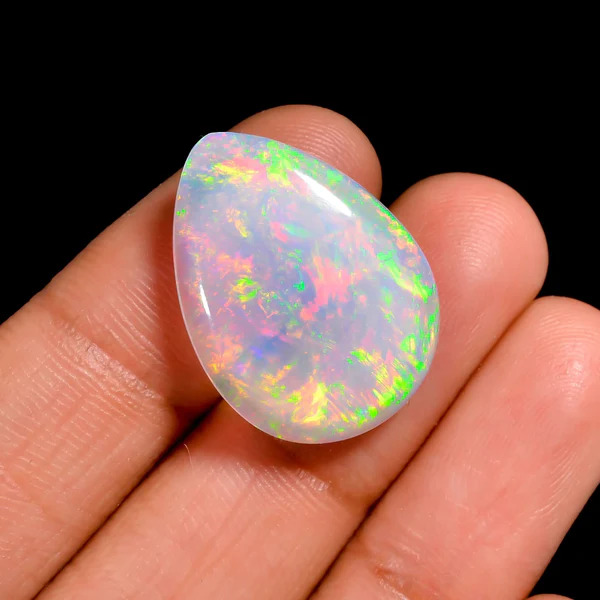
When you see an Ethiopian opal for sale , it most likely came from the Welo region the source I personally travel to and buy from. Welo opal is known for vivid, often fiery play-of-colour and a translucent-to-transparent base. Australian opal, on the other hand, tends to form in ironstone and is famous for darker body tones, especially in black opal.
Knowing the origin matters because it tells you how the stone will behave. Ethiopian opal is hydrophane meaning it can absorb water and temporarily change appearance. It's not a flaw, but it's something you should know before you wear it in the shower or leave it soaking in a cleaning solution.
How to Spot a Genuine Opal Stone for Sale (Not a Lookalike)
This is the part I wish more buyers asked about. A few honest checks:
- Look at the pattern, not just the colour. Natural opal shows irregular, organic flashes — broad flash, pinfire, harlequin. Lab-grown or imitation opal (like Slocum stone or certain glass) often has a too-perfect, columnar "lizard skin" pattern visible from the side.
- Ask if it's a doublet or triplet. These are real opal slices glued onto a backing (and sometimes capped with quartz). They're not fake, but they should be priced and described as such — never sold as solid natural opal.
- Check the seller's sourcing story. Anyone selling an opal stone for sale should be able to tell you roughly where it was mined. If they can't, that's a red flag.
Types of Opal You'll Come Across While Shopping
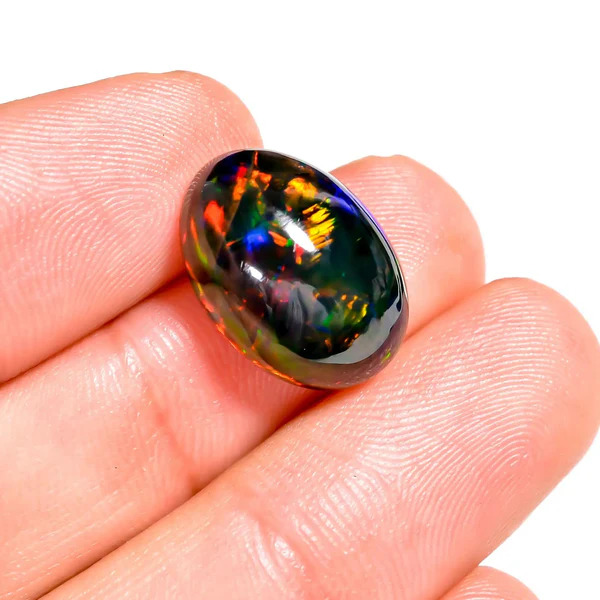
Ethiopian Black Opal – Dark to grey-black body tone with strong, often electric play-of-colour. Highly sought after for statement jewelery.
Ethiopian Crystal/White Opal – Lighter base, glassy transparency, great for showing off color flash in pendants and rings.
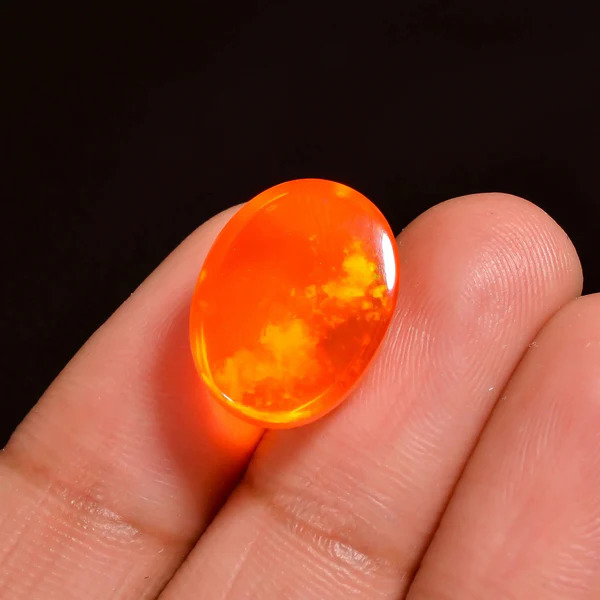
Fire Opal – Warm orange-to-red body colour, sometimes with little play-of-colour, prized for its color alone.
Opal Cabochons – Pre-shaped and polished, ready to set straight into jewelery — the most popular form for designers and wire wrappers.
Rough Opal – Unfinished material for cutters and lapidaries who want to shape their own cabochon.
What Actually Affects the Price of an Opal Stone for Sale
- Play-of-color intensity – the more colors and the brighter the flash, the higher the value.
- Base/body tone – darker bases usually make colors pop more and cost more.
- Pattern type – harlequin and broad flash patterns are rarer and command a premium over pinfire.
- Clarity and stability –fewer cracks (called “crazing”) and good structural stability matter a lot, especially with hydrophane Ethiopian material.
- Cut and finish – a well-domed, symmetrical cabochon with a clean polish will always outprice a rough or poorly shaped one.
A Personal Note Before You Buy
I've spent close to seven years sourcing gemstones directly from source, opal included, and I'll be honest with you — this stone has a way of humbling you. You can hold what looks like a dull gray pebble, and then tilt it half a millimetre, and it explodes into color you didn't know was hiding inside it. That unpredictability is exactly why I keep going back to the mines myself instead of buying blind from a middleman. When I list an opal stone for sale, I want to be able to tell you exactly where it came from and why I picked it.
Final Thought
If you're browsing for an opal stone for sale, slow down and look for the story behind it — where it was mined, how it was cut, and who's selling it to you. A good opal doesn't need exaggerated marketing. It sells itself the moment you tilt it toward the light.
Browsing our current Ethiopian opal collection? Every stone is hand-picked and sourced directly from Welo mines, no middlemen, no guesswork.
Frequently Asked Questions
Q1. Is natural opal a good investment?
Ans. Natural opal, especially fine Ethiopian and Australian material with strong play-of-colour, has historically been held and appreciated in value, particularly rarer patterns like harlequin.
Q2. Can I wear opal jewelery every day?
Ans. Yes, but be gentle with hydrophane Ethiopian opal, avoid prolonged water exposure, harsh chemicals, and sudden temperature changes, which can cause crazing.
Q3. What's the difference between an opal cabochon and rough opal?
Ans. A cabochon is already cut, domed, and polished, ready for setting. Rough opal is unprocessed material that still needs to be shaped by a lapidary.
Q4. Why do some opal stones for sale look cloudy compared to others?
Ans. Cloudiness usually comes down to lower transparency in the base material or, in Ethiopian opal, temporary water absorption. It often clears as the stone dries.
Q5. Is Ethiopian opal as durable as Australian opal?
Ans. With proper care, Ethiopian opal is perfectly wearable, but because it's hydrophane, it needs slightly more caution around moisture and chemicals than Australian opal, which is non-hydrophane.